Programme Overview
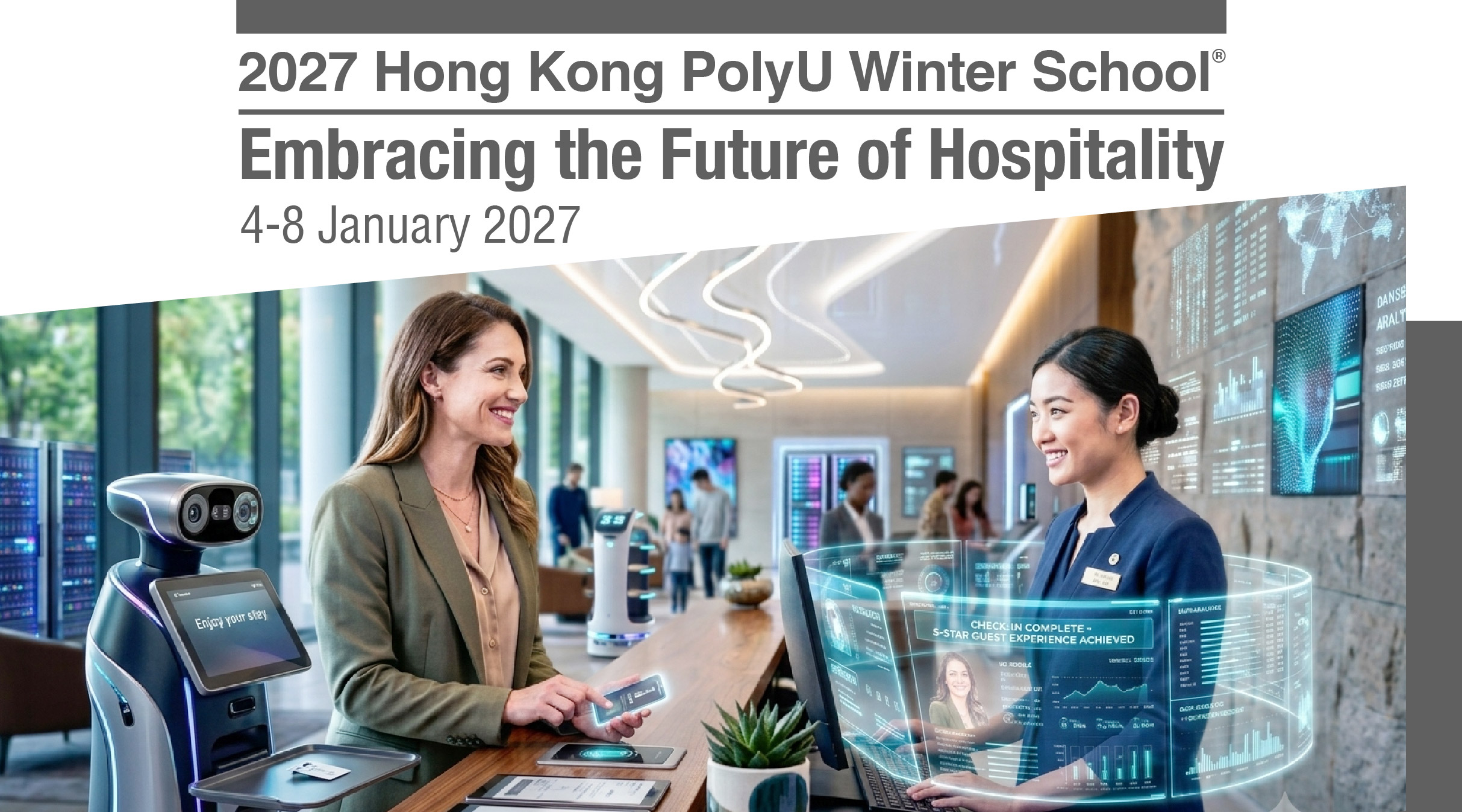
The 2027 Hong Kong PolyU Winter School® by the School of Hotel and Tourism Management offers five practice-oriented modules to help hospitality and tourism professionals respond to a fast-changing business environment and create stronger organisational value. Covering customer analytics, employee engagement and workplace well-being, applied AI in hotel management, Chinese Mainland’s social media ecosystem, and hotel valuation and management contracts, the programme offers a balanced mix of digital innovation, people-focused management, market insight, and strategic investment thinking. Through practical frameworks, industry examples, and applied learning, participants will gain actionable knowledge and tools to enhance guest experience, strengthen team performance, improve commercial effectiveness, and support long-term value creation.
The 2027 Hong Kong PolyU Winter School® will be held on 4-8 January 2027. The programme is co-organised by the School of Hotel and Tourism Management at The Hong Kong Polytechnic University and the Hong Kong Hotels Association.
Certificate Programme:
Participants who successfully complete each one-day (6-hour) module in the programme will receive a Certificate of Completion for Hong Kong PolyU Winter School® issued by the School of Hotel and Tourism Management.
The Programme will be conducted in English.
Venue:
All modules will be held at the School of Hotel and Tourism Management, The Hong Kong Polytechnic University.
Programme Schedule
| Date / Time | Module | Instructor |
|---|---|---|
| 4 January 2027 (Monday) 9:30am – 5:00pm | From Investment to Value Creation: Hotel Valuation and Management Contracts | Prof Qu XIAO Mr Steve RUSHMORE |
| 5 January 2027 (Tuesday) 9:30am – 5:00pm | Engaging Customers and Driving Sales through User-Generated Content Data Analytics | Prof Bela STANTIC |
| 6 January 2027 (Wednesday) 9:30am – 5:00pm | Measuring Employee Engagement and Improving Workplace Well-being | Prof Yitong YU |
| 7 January 2027 (Thursday) 9:30am – 5:00pm | Applied AI in Hotel Management: Creating Value for Guests and Businesses | Dr May YANG |
| 8 January 2027 (Friday) 9:30am – 5:00pm | Decoding Chinese Mainland's Social Media: From Brand Building to Consumer Conversion | Dr Emily CHEN |
Module Outlines
From Investment to Value Creation: Hotel Valuation and Management Contracts
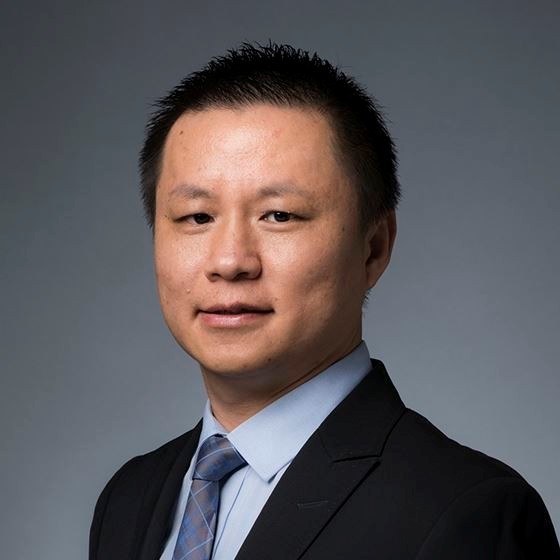
Assistant Dean and Associate Professor, School of Hotel and Tourism Management

Creator of the Hotel Valuation Methodology & Online Courses: Management Contracts, Franchises; Founder of HVS
▸ Module Outline
This module examines how hotel valuation and management contracts shape long-term asset value. In a complex hospitality market, significant value often remains unrealised when key contract decisions — such as brand choice, fee structures, performance tests, and termination provisions — are not aligned with investment goals. Designed for owners, investors, developers, asset managers, and senior hospitality executives, the course explores the link between valuation, operator selection, management and franchise agreements, and value creation. Through practical frameworks, international best practices, and case studies, it provides methods to assess operator proposals, manage contractual risk, strengthen negotiating positions, and make investment decisions that maximise asset value.

Engaging Customers and Driving Sales through User-Generated Content Data Analytics
Professor, School of Hotel and Tourism Management
▸ Module Outline
This module equips participants with the knowledge and skills to harness user-generated content (UGC) such as reviews, social media posts, and customer feedback to better understand customer behaviour, strengthen engagement, and drive sales growth. Through real-world examples and hands-on exercises, attendees will learn how to identify, collect, process, analyse, and translate UGC data into actionable insights that inform marketing strategies, enhance customer experiences, and improve conversion outcomes.
By the end of this module, participants will understand the strategic importance of UGC in shaping brand perception, influencing consumer decisions, and providing authentic customer insight. They will also be able to identify relevant sources of UGC, such as social media posts, online reviews, forums, and comments, and recognise key metrics used to evaluate their marketing value. In addition, participants will develop the ability to interpret UGC and use techniques (such as sentiment and emotion analysis, topic modelling, and engagement patterns) to generate meaningful insights for marketing strategy and decision-making.

Measuring Employee Engagement and Improving Workplace Well-being
Assistant Professor, School of Hotel and Tourism Management
▸ Module Outline
Employee engagement and workplace well-being have become critical drivers of competitive advantage in the hospitality and tourism industry, where service quality, talent retention, and guest experience rely on the daily energy and commitment of both frontline and office-based teams. This module introduces participants to a modern, evidence-based approach to measuring and strengthening the human dimension of organisational performance through a dual-track assessment of engagement and well-being.
The module covers the foundations of employee engagement and workplace well-being, internationally validated measurement frameworks, and the design of weekly pulse surveys and monthly questionnaires. It also explores scoring and weighting methodologies for composite indicators, AI-enhanced data analysis and early-warning dashboards, and incentive systems that boost response rates without compromising data integrity. In addition, the module includes sample questionnaires and hands-on group exercises tailored to the hospitality industry. Participants will gain valuable insights to adapt the framework and questionnaire design to the specific context and needs of their own organisations.

Applied AI in Hotel Management: Creating Value for Guests and Businesses
Postdoctoral Fellow, School of Hotel and Tourism Management
▸ Module Outline
This module provides hotel professionals with a practical, non-technical understanding of how artificial intelligence (AI) is transforming hotel management and how it can be used to enhance guest experience and business performance. Participants will explore the capabilities and limitations of AI tools, the business value they can create, and the areas where human judgement remains essential. The module covers AI applications across guest service, operational workflows, management reporting, and commercial decision-making. Examples include AI-assisted guest communication and service recovery, operational planning and knowledge support, as well as revenue and distribution decision support. It also examines how AI assistants are reshaping the ways hotels are discovered, recommended, and booked, and considers the implications for hotel distribution strategies and customer relationships.
Participants will learn through hospitality industry case studies, live demonstrations, guided discussions, and a hands-on workshop in which they apply AI tools to practical hotel management tasks. They will develop the ability to identify suitable use cases, assess potential business value, evaluate AI-generated outputs critically, and determine the appropriate level of human oversight. The module also addresses what successful AI adoption requires from managers and organisations, including clear accountability, sound judgement, and effective integration of AI into everyday work processes. By the end of the day, participants will have developed a 90-day action plan for applying AI within their department or organisation.

Decoding Chinese Mainland's Social Media: From Brand Building to Consumer Conversion
Research Assistant Professor, School of Hotel and Tourism Management
▸ Module Outline
Chinese Mainland's social media landscape is dominated by integrated, high-traffic platforms like Xiaohongshu (Rednote), Weixin (WeChat), and Douyin (TikTok). These platforms, which require real-name authentication, act as all-in-one ecosystems for messaging, payments, shopping, and entertainment, and their distinct characteristics are different to Western counterparts. This module explains how these platforms can be used to build brands and create traffic in hospitality and tourism. In addition to social media posting, this module covers location-based search optimisation and professional account tools and shows how these platforms influence travelers' decisions. Through hospitality-related case studies, participants will learn how to turn online exposure into bookings and foot traffic.
This module illustrates the Xiaohongshu ecosystem by explaining its "search + recommendation" logic for the hospitality and tourism sectors and its key features and tools to improve content visibility. Participants will learn how to carry out effective "seeding" strategies to generate traffic and enhance conversion.
Registration Fees
Early Bird (by 30 November 2026): HK$4,000 per module
After 30 November 2026: HK$4,500 per module
✓ Tuition, module materials, lunch & refreshment breaks
✓ Hotel ICON tour option
✓ Certificate of Completion issued by School of Hotel and Tourism Management
Cancellation Policy: A 50% refund will be made for cancellations received in writing before 15 December 2026. No refund thereafter.
Further Information
Preferential room rates at Hotel ICON
School of Hotel and Tourism Management at The Hong Kong Polytechnic University has secured a preferential room rate (including daily buffet breakfast for up to 2 persons) for Hong Kong PolyU Winter School® participants at its fully integrated teaching and research hotel, Hotel ICON. This preferential rate will be subject to availability of the hotel, so early booking is advised. Please click here to book directly with Hotel ICON. Pre-payments are non-refundable if reservations are cancelled within 2 days prior to arrival.